
Home Swimming Pools in Egypt — Designed and Built for Your Villa
A home swimming pool is not just a luxury — it changes how your villa looks, how the garden is used, and what the property is worth. Fox Pools has designed and built private pools across New Cairo, Sheikh Zayed, 6th of October and the North Coast since 1993, in concrete and prefabricated systems, with a structural warranty of up to 10 years on concrete pools.
Why build a home pool?
- Real added value to the villa at resale or rental, especially in compounds and coastal projects.
- Private family swimming and leisure space through the whole summer season, with no club crowds.
- Full control of water hygiene and treatment instead of relying on shared pools.
- A design that ties the garden and terrace together and becomes the heart of family gatherings.
Pool sizes that suit villas and gardens
Small garden (up to 150 m²): A 6 × 3 m pool at a constant 1.20 m depth, or 7 × 3.5 m where corners allow. Keep at least 1.20 m of walkway around the pool for circulation and servicing.
Mid-size garden (150 – 300 m²): The most requested size in New Cairo and Sheikh Zayed villas: 8 × 4 m with depth graded from 1.20 to 1.60 m, a 1.50 m wide internal staircase and LED lighting.
Large garden (300 m²+): From 10 × 4.5 up to 12 × 5 m, with room for a separate 40 cm children’s pool, an integrated spa, or an infinity edge where there is a view.
Roof or terrace pool: Compact 4 × 2 up to 6 × 3 m at 1.10 m depth, with a mandatory structural load study first — every cubic metre of water is a tonne on the slab.
Not sure which system fits? Read the pool types guide or see how pool construction in Egypt works.
Concrete or prefabricated for a home pool?
A concrete pool is structurally designed for the site, takes any shape, depth, steps or seating, and is finished in ceramic, mosaic or stone. It is the usual choice for most villas, and our concrete pools carry a structural warranty of up to 10 years.
A prefabricated pool is built on a factory-made panel structure in set shapes and sizes, with less concrete work on site. It suits gardens where a standard shape works, or where difficult access makes large concrete works impractical. See the full comparison in concrete vs fibreglass vs liner and types of swimming pools.
Before you build a pool at home
- Compound or developer rules — setbacks, working hours, machinery access — and obtaining approval is the owner's responsibility, so learn them before design.
- The access route for machinery and materials into the garden, and where excavated soil will be stored.
- Where the pool sits relative to the sun, trees, neighbours and the view from the house.
- Where the plant room goes, the electrical supply available, and where backwash water will drain.
- If there are children in the house: a fence with a self-latching gate, a safety cover and anti-entrapment drain covers — details in our guide to kids swimming pools.
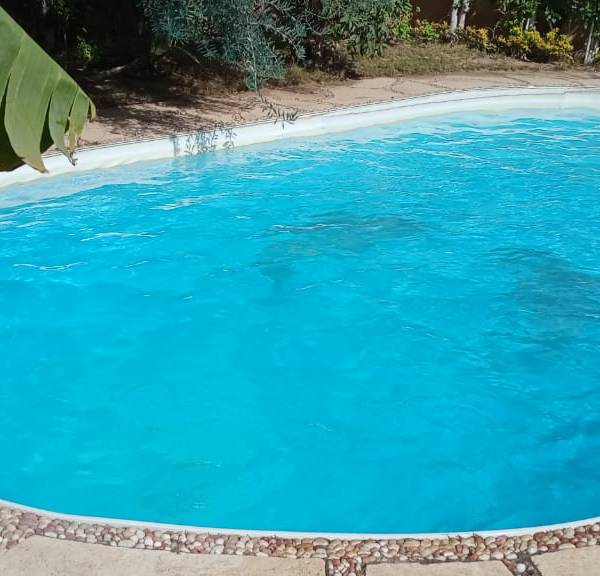
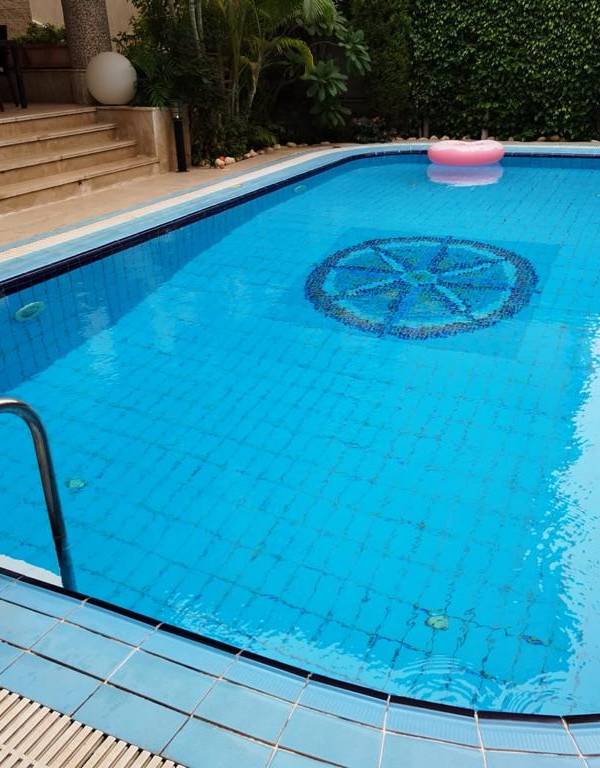
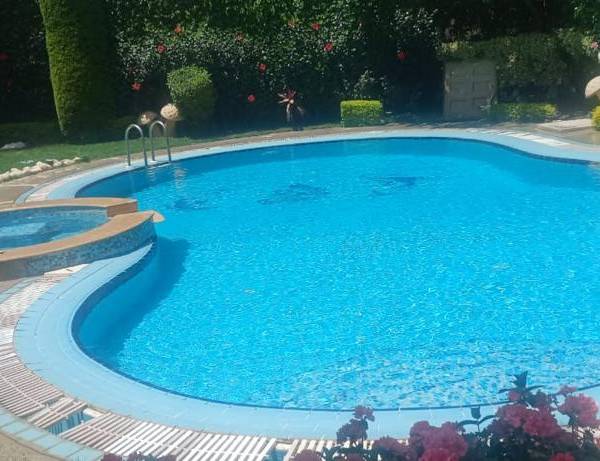
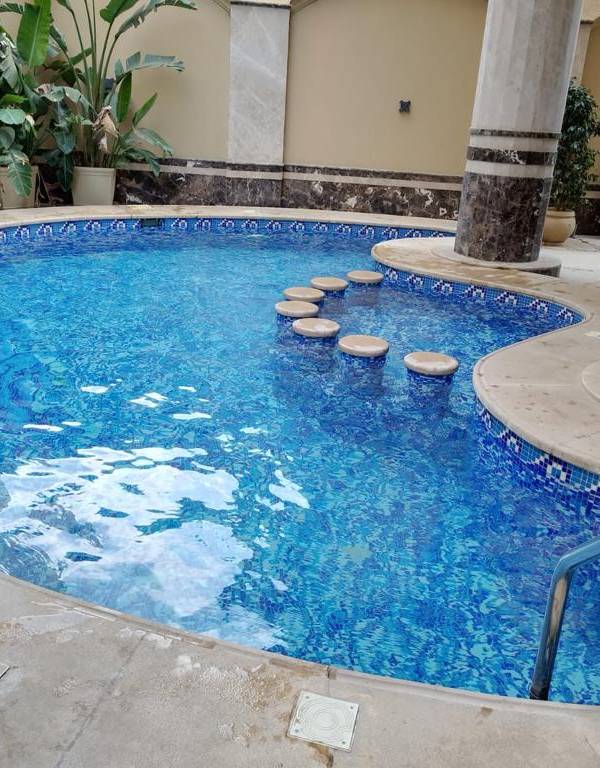
Home pool photos from our projects


Additions for a home pool
- A shallow children's area or a separate kids pool with the right depth and its own filtration.
- A built-in outdoor jacuzzi beside the pool or spilling into it.
- An overflow or infinity edge where the look or the view is the priority.
- Underwater LED lights plus deck and step lighting, made by our sister company Waterstar with spare parts available.
- Heat-pump heating to extend the swimming season, with a cover to reduce heat loss.
- A safety cover or a thermal cover, depending on the job — the difference is explained in our pool renovation guide.
What drives the cost of a home pool
- Size, depth and the shape of the pool.
- Construction type — concrete or prefabricated.
- Ground conditions, and whether there is rock or groundwater.
- The waterproofing system and the level of interior finish and deck.
- Pump, filter and lighting specification, and additions such as heating.
- Machinery access to the garden and compound restrictions.
Read how to compare quotations in our guide to swimming pool cost in Egypt.
The build process in short
- Garden survey covering levels, soil, plant-room location and drainage.
- 2D and 3D design of the pool with its surrounding garden, plus a line-by-line quotation.
- Excavation and reinforced concrete, then multi-layer waterproofing with leak testing.
- Finishes (ceramic, mosaic or liner) plus coping and deck stonework.
- Pumps, filters, lighting and treatment systems sized to the actual water volume.
- Filling, water chemistry balancing, a trial run and handover with the written warranty.
Duration varies with size, construction type, finishes and site conditions, and the quotation sets out these phases in detail.
Home pool FAQs
How much does a home swimming pool cost in Egypt?
Cost depends on size and depth, construction type (concrete or prefabricated), finish level, pump and filter specification, soil conditions and equipment access to the garden. We issue a detailed quotation after a site survey rather than quoting approximate figures.
How much space does a home pool need?
A comfortable 6 × 3 m pool fits a 150 m² garden, while 8 × 4 m is the most common villa size. As a rule keep at least 1.20 m of walkway around the pool and allow 2–4 m² for a plant room.
Should a home pool be concrete or prefabricated?
Concrete takes any shape and depth and is the usual choice for most villas, with a structural warranty of up to 10 years. A prefabricated pool comes in set shapes and sizes with less concrete work on site, and suits gardens where a standard shape is enough or access is difficult.
What are the phases of building a home pool?
Survey and design, then excavation and concrete, then waterproofing and leak testing, then finishes, then equipment, then filling, commissioning and handover. The actual duration depends on size, construction type, finishes, site conditions and compound rules, and the quotation sets out these phases.
What is the best depth for a family pool?
A graded depth from 1.20 to 1.60 m is ideal: safe for supervised children and comfortable for swimming. We do not recommend exceeding 1.80 m in home pools unless a diving area is required.
How do I make a home pool safe for children?
With layers of safety together: a fence at least 1.2 m high with a self-latching gate, a weight-bearing safety cover, anti-entrapment drain covers and non-slip edges — plus constant adult supervision. Details are in our guide to kids swimming pools.
What does maintaining a home pool cost?
Routine maintenance covers water treatment, filter backwashing, floor cleaning and pump checks. We offer monthly contracts or on-demand visits, priced by water volume and visit frequency.
Read next: Swimming pool design guide · Kids swimming pools · Outdoor jacuzzi · Overflow swimming pools · What drives pool cost · Pool maintenance